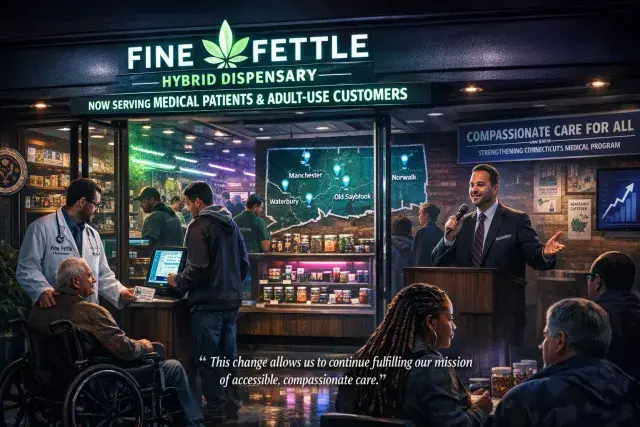
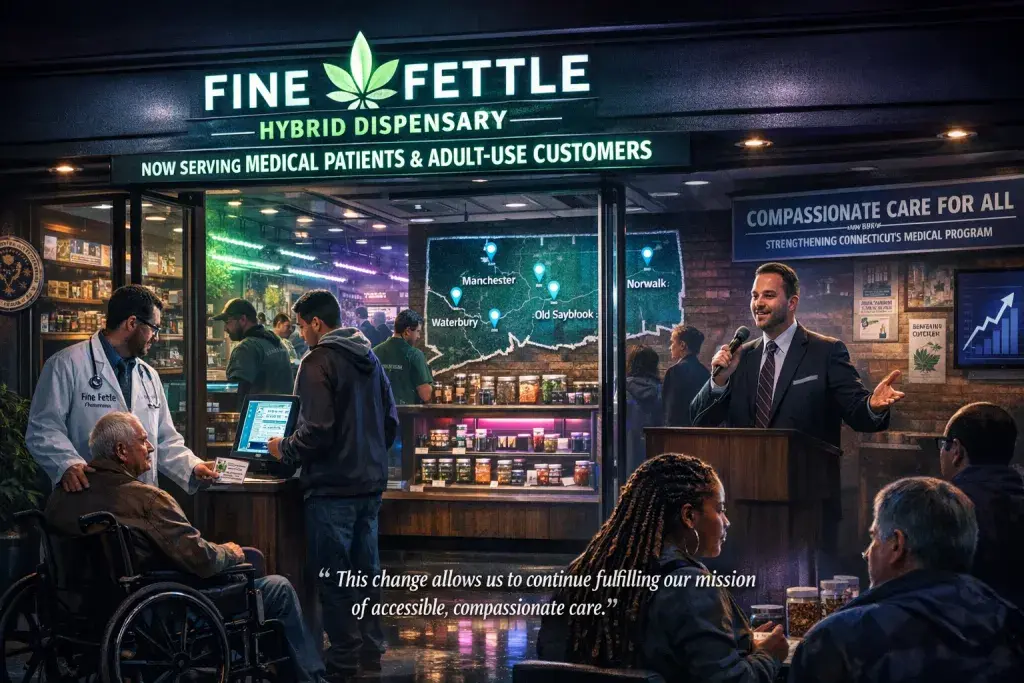
On January 15, Fine Fettle will transform its nine dispensaries across Connecticut into hybrid facilities, enabling them to serve both registered medical patients and adult-use customers. This shift promises enhanced access to cannabis products, streamlining care in a state where medical program participants have faced limited options.
Regulatory Shift Drives Hybrid Expansion
Recent amendments to Connecticut's cannabis regulations have paved the way for recreational retailers to adopt hybrid models, allowing sales to medical patients in the state's program. This legislative change addresses longstanding gaps in patient access, particularly in underserved regions. Fine Fettle, a key player in the market, is leading this transition with all locations converting simultaneously.
- Locations include Manchester, Norwalk, Old Saybrook, Waterbury, and West Hartford.
- Each site will maintain remote and in-person consultations with licensed pharmacists, upholding medical program standards.
- Hybrid operations boost efficiency by unifying inventory and staff training for both patient groups.
Expertise and Equity at the Core
Fine Fettle Chief Operating Officer Benjamin Zachs emphasizes the move's focus on compassionate care. "This change allows us to continue fulfilling our mission of accessible, compassionate care while strengthening the state's medical program," he stated. By integrating services, the company reduces travel burdens for patients and ensures consistent quality. In public health terms, such models support safer cannabis use through education and personalized consultations, aligning with trends toward regulated, inclusive markets that prioritize well-being over fragmentation.
Implications for Connecticut's Cannabis Landscape
This expansion signals Connecticut's maturation as a cannabis market, blending medical rigor with recreational growth. Medical patients gain proximity to specialized services, potentially improving adherence and outcomes in conditions like chronic pain or PTSD, where cannabis offers alternatives to traditional pharmaceuticals. Broader societal benefits include economic efficiencies for operators and reduced black-market reliance. Looking ahead, Fine Fettle's model could inspire statewide standardization, fostering equity in a industry projected to expand amid normalizing attitudes toward plant-based therapies.
Zachs added, "Patients shouldn't have to travel far for care or be stuck with limited options." With legislative support from the state Legislature and Department of Consumer Protection, this milestone reinforces a patient-centered evolution in cannabis access.