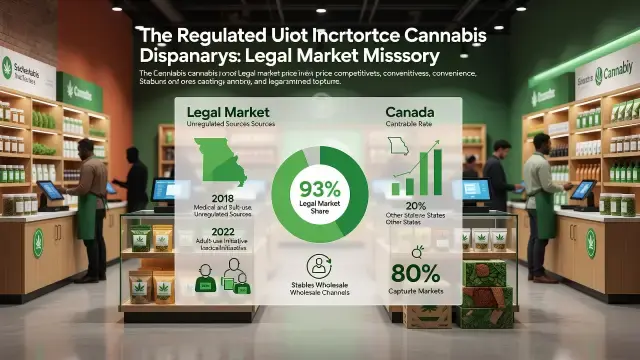
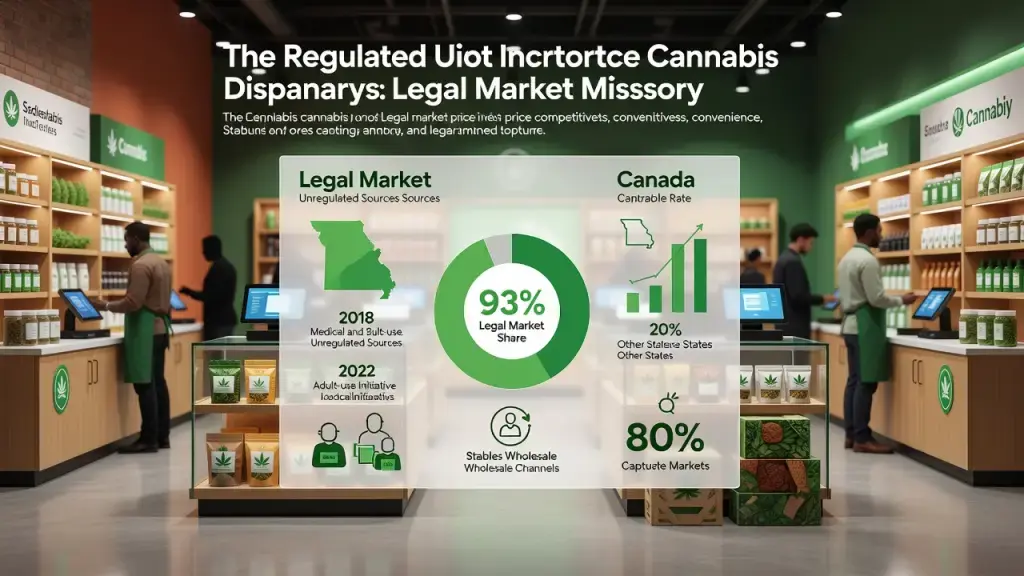
More than 90 percent of marijuana-related purchases in Missouri now flow through licensed dispensaries rather than unregulated sellers, according to state-commissioned research. The finding comes from the Missouri Cannabis Market Study: Phase 1, prepared for the Department of Health and Senior Services, and it marks a notable benchmark for a program built on two separate voter initiatives - medical access in 2018, adult-use sales in 2022.
What the Numbers Actually Measure
The report puts the regulated market's share of total cannabis expenditures at roughly 93 percent. That's a specific claim about spending, not about every individual transaction or every consumer's habits - a distinction that matters for anyone reading the headline figure at face value. Unregulated sources haven't disappeared; the study's authors are careful to note that illicit activity remains present. What's changed is the scale. Licensed dispensaries now account for spending that dwarfs all alternative channels combined, which is a different and arguably more meaningful measure of market health than simple transaction counts.
For operators, this is the kind of data point that justifies continued investment in compliant retail infrastructure - POS systems tied to seed-to-sale tracking, trained budtenders, lab-tested product with verifiable COAs. It's also a data point regulators will cite when defending licensing structures, tax rates, and enforcement priorities against critics who argue the legal market is pricing itself out of competition with illicit alternatives.
Why Market Capture Varies So Much by State
Missouri's result looks good next to the mixed record elsewhere in the US. States with denser dispensary networks and competitive wholesale pricing tend to displace illicit markets faster; states with capped licenses, high excise taxes, or slow rollout timelines tend to struggle. The mechanism isn't mysterious - consumers go where price and convenience align, and a thin retail footprint with premium pricing leaves plenty of room for unregulated supply to persist.
Canada offers a useful comparison point here, not a perfect one. Data from the Canadian market, legal since 2018, show roughly 80 percent of consumers reporting a shift from unregulated to legal sources. That's a lower capture rate than Missouri's reported figure, and it took longer to get there - a reminder that market maturity isn't just about legalization dates but about how many stores actually open, how fast, and at what price.
Operational Implications for Retailers and Suppliers
A 2023 consumer survey found that most adults in legal states say brick-and-mortar dispensaries are their primary source for cannabis products. That's a signal worth sitting with. It suggests the retail experience itself - compliant packaging, consistent batch testing, predictable store hours, professional staff - carries real weight in consumer decision-making, not just price.
- Dispensary operators should treat high market capture as validation of current compliance investment, not a reason to ease up on it.
- Wholesalers and brands benefit from a larger, more stable retail channel, but margin pressure from 280E tax treatment and competitive wholesale menus hasn't gone away.
- Regulators gain evidence to support current licensing and enforcement approaches, though continued monitoring of unregulated activity remains part of the job.
- Payment providers and point-of-sale vendors serving Missouri operators are working in a market with real transaction volume, which tends to attract more serious fintech and compliance-software investment over time.
None of this means the job is finished. A 93 percent capture rate still leaves a measurable share of spending outside regulated channels, and that residual market carries the usual risks - no age verification, no lab testing, no accountability if a product is contaminated or mislabeled. The report's conclusion is encouraging for Missouri's program, but it's a snapshot, not a finish line. Markets shift with pricing, with new licenses, with enforcement posture. Operators who treat this data as permission to coast are reading it wrong.