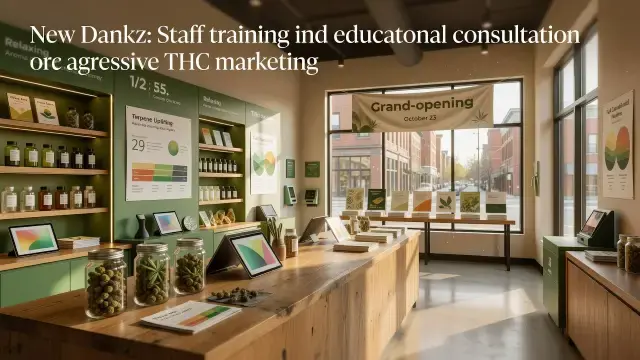
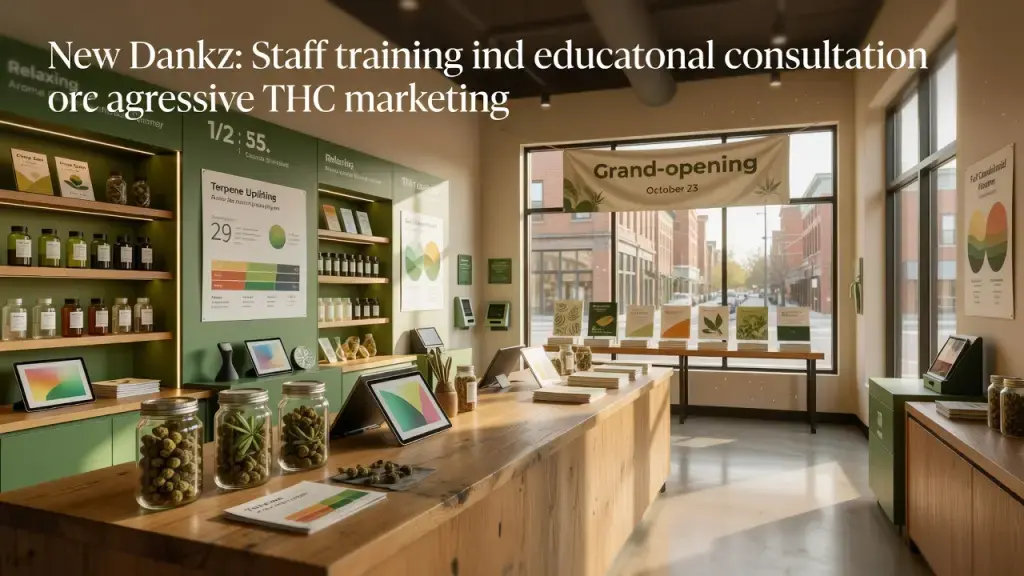
A new cannabis dispensary opening in St. Cloud, Minnesota, is staking its retail model on something many operators treat as an afterthought: staff education. Dankz, set to open Oct. 16 with a grand opening Oct. 23, is positioning itself against the industry's default sales pitch - chasing the highest THC percentage on the shelf - in favor of a consultative approach built around terpenes, cannabinoid profiles, and one-on-one customer guidance.
Why THC Percentage Is a Flawed Sales Metric
Dankz leadership is pushing back on a habit baked into cannabis retail since adult-use markets opened: customers scanning menus for the highest THC number and assuming it equals the strongest or best experience. Chief operating officer Sid Rosen argues that framing is misleading, since terpene content and the broader mix of cannabinoids shape effects as much as potency alone. That's not a fringe opinion in the industry - it's a recurring tension between what sells easily and what actually serves the customer. A high-THC flower batch and a lower-THC batch can produce noticeably different experiences depending on their terpene profile, which is precisely why relying on a single lab-tested number oversimplifies a complex product. For compliance teams and budtenders alike, this matters: COAs list potency and cannabinoid breakdowns, but translating that data into customer guidance requires training most retail hires don't walk in with.
Staffing and Training as a Compliance and Retail Strategy
Before opening, Dankz ran employees through three full days of cannabis-specific training plus a separate day of retail training - a notable investment for a single-location startup. Rosen says the local labor pool surprised him, with experienced growers and cannabis enthusiasts willing to start from scratch on retail fundamentals. That matters operationally: budtenders are the compliance frontline, responsible for age verification, accurate product information, and steering customers away from assumptions that could lead to overconsumption. General manager Heather Robertson completed the state's Cannabis Medical Consultant Course through Minnesota's Office of Cannabis Management, a credentialing step that signals how seriously the store is treating medical-use guidance rather than treating it as a regulatory checkbox.
Sourcing Strategy: Local Growers Over Large Distributors
Dankz plans to source most of its flower from small Minnesota growers rather than leaning on large-scale distributors, a departure from the vertically integrated supply chains Rosen worked within in Michigan, where distributor-sourced product made up the bulk of dispensary inventory. That sourcing choice carries real supply-chain implications: smaller grower relationships can mean more variability in batch size and availability, but also tighter traceability and a more direct line between cultivator and dispensary shelf. For a market still building out its wholesale infrastructure, that's a meaningful operational bet, and one other new entrants in Minnesota's adult-use market will be watching.
What the Market Entry Signals for Minnesota Operators
Rosen cited Minnesota's comparatively lower cannabis tax structure and a relatively smooth local permitting process in St. Cloud as factors in choosing the location over continuing to serve Minnesota customers from Michigan's Upper Peninsula, where he said a majority of his former dispensary's traffic already came from Minnesota license plates. That cross-border customer behavior is a familiar pattern in cannabis retail: proximity to a legal market without local access drives demand until a state stands up its own licensed supply. With Minnesota's adult-use retail landscape still filling out, how new entrants balance sourcing, staff training, and consumer education may end up shaping customer retention more than any single potency number on a label.