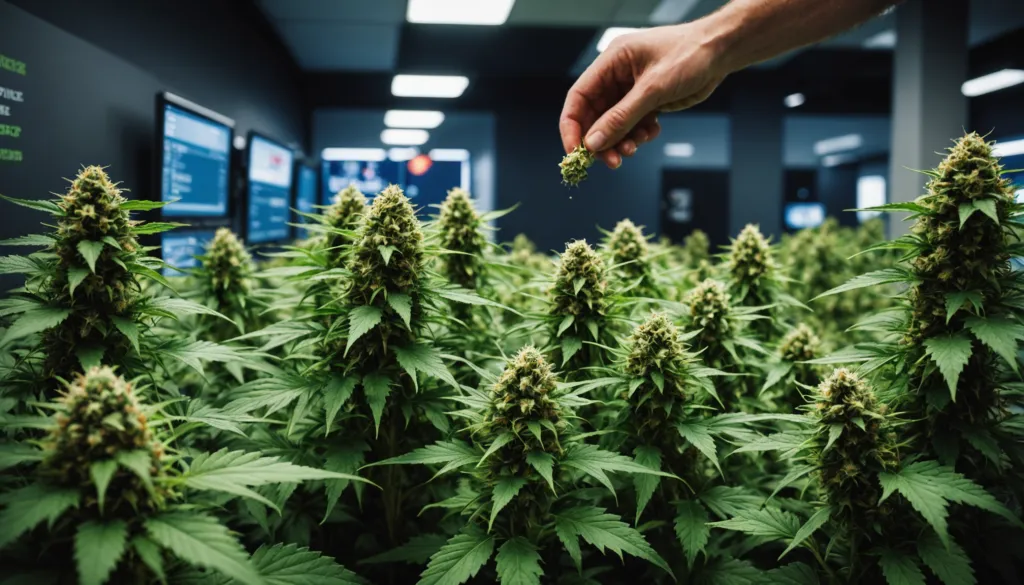
Money is flowing into cannabis equities at a pace the sector hasn't seen in years, and the AdvisorShares Pure US Cannabis ETF (MSOS) is the clearest evidence of it. The fund posted a 103.7% one-year net asset value return as of May 31, more than double the North American Marijuana Index's 36.9% gain and well ahead of the S&P 500's 29.8%. MSOS managed $1.13 billion in assets as of June 5, and the rally has accelerated in recent weeks as a June 29 DEA administrative hearing on marijuana rescheduling approaches.
The timing isn't coincidental. Operators have spent years bracing for a regulatory shift that could finally ease the tax burden imposed by Section 280E, the federal provision that bars cannabis businesses from deducting ordinary expenses like payroll and rent because the plant remains federally controlled. When Acting Attorney General Todd Blanche moved state-licensed medical marijuana products into Schedule III in April and opened the door to broader rescheduling, it wasn't just a policy footnote - it was a signal that balance sheets across the multi-state operator landscape could look meaningfully different within a year or two. For operators managing compliance logs, wholesale menus, and seed-to-sale tracking across multiple state markets, the back-office implications are just as significant as the trading action; the same operational discipline that keeps a dispensary audit-ready, whether through METRC integration or platforms offering cannabis software for dispensaries arizona operators rely on, becomes the foundation for scaling once capital access loosens. cannabis software for dispensaries arizona
Trulieve's NYSE Debut Signals a Structural Shift
Trulieve Cannabis, MSOS' largest holding at roughly 30% of assets, began trading on the NYSE under the ticker TRLV this week. CEO Kim Rivers framed the listing as a "historic milestone," and the mechanics behind it matter for the rest of the industry watching from the sidelines. Trulieve separated its medical cannabis operations from its adult-use business specifically to qualify for a senior exchange listing - a structural workaround that other multi-state operators are almost certainly studying. Uplisting from over-the-counter markets to the NYSE or Nasdaq isn't just a prestige move; it widens the pool of institutional investors who are barred by internal mandates from holding OTC-listed equities, and it can lower the cost of capital for companies still carrying debt loads built during the industry's earlier expansion years.
What the Rescheduling Hearing Actually Decides
The June 29 hearing, expected to run through no later than July 15, will examine whether marijuana products more broadly - including adult-use cannabis, not just state-licensed medical products - should move to Schedule III. That distinction matters enormously for retail economics. A shift here wouldn't legalize cannabis federally or resolve banking restrictions overnight, but it would extend 280E relief to companies serving adult-use markets, not just medical ones. Cresco Labs' recent $50 million revolving credit facility from Needham Bank is an early data point on what looser capital markets could look like; CEO Charlie Bachtell called it a "non-dilutive tool" for acquisitions and positioning toward a future uplisting. Expect more of these financing arrangements to surface as lenders grow comfortable underwriting cannabis credit risk.

Reading the Upside Numbers With Some Caution
Analyst price targets compiled across MSOS holdings show wide dispersion - Verano at roughly 195% implied upside, Jushi near 183%, Cresco close to 99%, against Trulieve's more modest 27% and Glass House's negative 22%. That spread is a reminder that rescheduling optimism isn't distributed evenly across balance sheets, debt maturities, or state footprints. Retail sentiment on platforms like Stocktwits has run "extremely bullish" on names like MSOS, Trulieve, and Green Thumb Industries, but enthusiasm among retail traders has historically outpaced the slower, procedural reality of federal rulemaking. Fair enough to watch the hearing closely; less wise to treat a favorable outcome as guaranteed. Dispensary operators, wholesalers, and payment providers all have a stake in how this plays out, since capital access, banking relationships, and cashless payment infrastructure remain tied to the plant's federal status regardless of what happens on a single hearing date.
?>