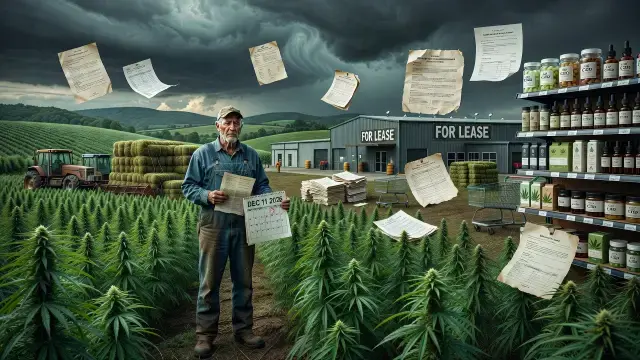
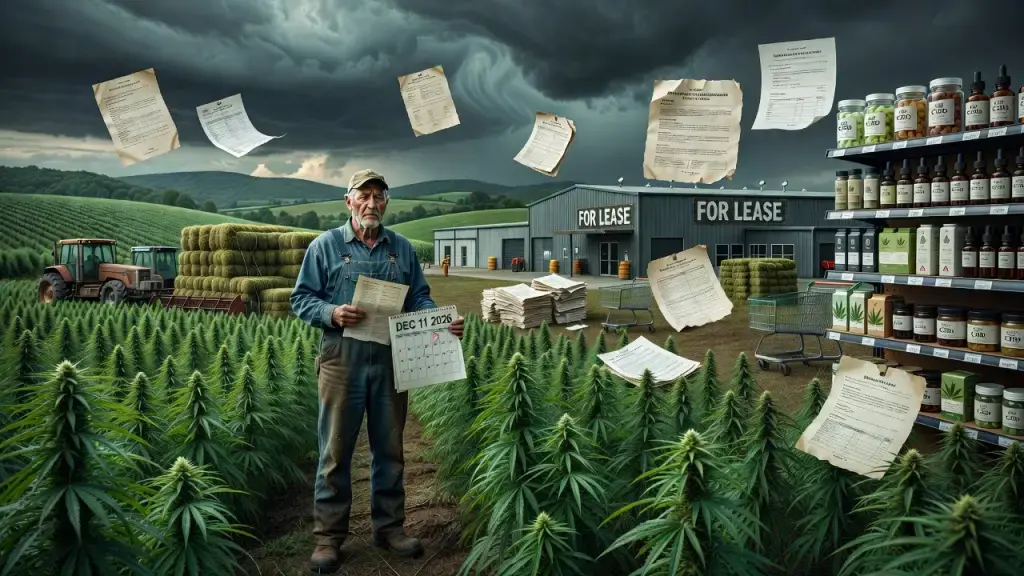
A federal provision set to take effect Dec. 11, 2026, would prohibit the sale of most hemp-derived consumable products nationwide, including full-spectrum CBD, delta-8 and delta-9 items that have operated under a regulatory gray zone since the 2018 Farm Bill. For Kentucky, where thousands of acres of hemp now supply a retail supply chain built over nearly a decade, the deadline isn't an abstraction. It's a countdown with real payroll, real farm loans and real patients on the other end of it.
A supply chain built on a legal loophole now facing collapse
The 2018 Farm Bill legalized hemp containing no more than 0.3% delta-9 THC by dry weight, removing it from the Controlled Substances Act. What followed wasn't just fiber and grain production - it was an entire consumer products category built around hemp-derived cannabinoids extracted and concentrated into gummies, tinctures, beverages and vape products. That category grew because federal law never closed what critics call the "intoxicating hemp loophole" and supporters call a legitimate agricultural market. Either framing misses the operational reality: farmers signed cultivation contracts, processors built extraction facilities, and manufacturers invested in compliant packaging, lab testing protocols and wholesale distribution networks based on the assumption that this market had a future. A ban inserted into an appropriations bill changes that calculus overnight, with no transition period built for growers who already have crop in the ground or loans on the books.
Farm economics don't pause for a legislative fight
Hemp farming operates on an annual cycle - seed, plant, harvest, sell - and financing follows that same rhythm. Farmers take out operating loans against expected revenue from a crop that hasn't been sold yet. When a farmer invests in equipment or expands acreage based on a 10-year note, that debt doesn't disappear if the market underneath it does. This is the same structural risk that has shadowed licensed cannabis businesses more broadly: heavy upfront capital requirements, thin margins, and a regulatory environment that can shift faster than a business can adjust its balance sheet. Processors and manufacturers face a parallel problem. Facilities built for extraction and formulation, along with the payroll and sales tax revenue tied to them, only pencil out if there's a legal product to sell at the other end.
What a ban would mean for retail shelves and compliance programs
For retailers currently selling hemp-derived CBD and cannabinoid products, a federal prohibition would mean pulling SKUs that have passed state licensing, lab testing and labeling requirements - not because the products failed a safety standard, but because Congress changed what's legal to sell. That distinction matters for consumer trust. States with hemp programs generally require certificates of analysis, potency labeling and age-gated sales, the same compliance infrastructure licensed cannabis retailers use to assure consumers of consistency and safety. A blanket ban doesn't address product safety directly; it removes the category regardless of whether individual products meet testing and labeling standards. Retailers, wholesalers and brands now face a narrow window to either lobby for legislative relief or plan for inventory liquidation and contract cancellations before the deadline.
Patients and consumers are part of the market calculation, too
Hemp-derived CBD products have also become embedded in how some consumers manage everyday wellness routines, and a new Medicare hemp-derived products program launched this year signals growing institutional interest in the category, particularly among older patients. A ban would unwind that infrastructure as well, leaving consumers who have built product routines around specific brands and formulations to search for alternatives with little notice. None of this amounts to a medical endorsement of hemp products - that's a conversation for regulators and clinicians, not a retail or policy debate. But it does mean the hemp ban question isn't confined to farm income and tax revenue. It touches consumer access, product consistency and the compliance systems that were supposed to make this market safer, not just legal.