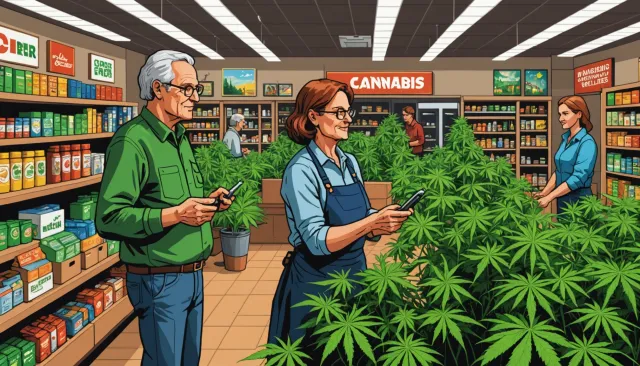
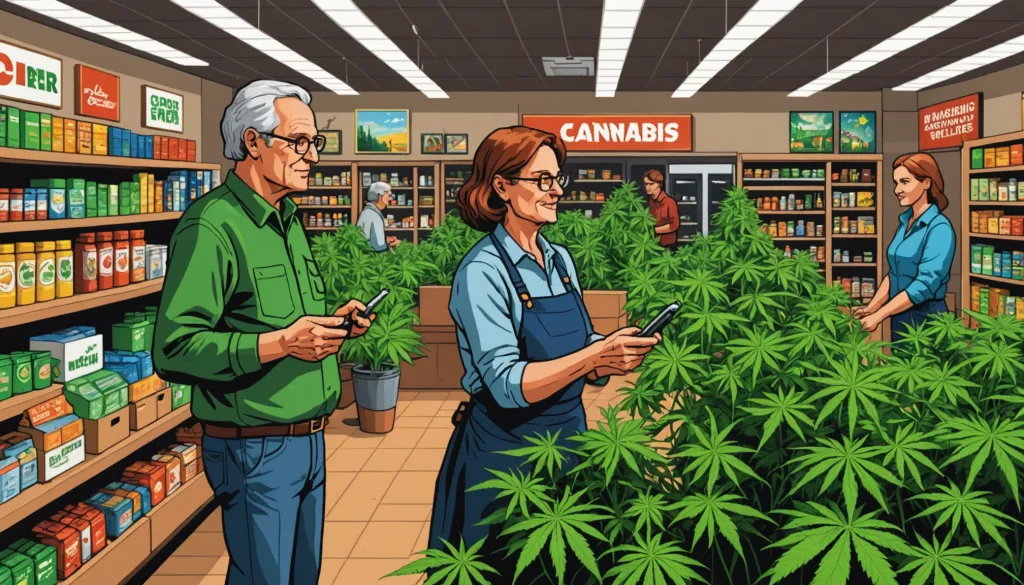
Michigan's cannabis market has a supply problem that everyone in the industry can recite by heart: too much flower, too many license holders, prices scraped down to the bone. But a less-discussed data point is starting to surface in industry conversations - the state may not have run out of customers so much as it has overlooked one. Baby Boomers, according to national purchasing data and University of Michigan research, are consuming cannabis at rates that would have seemed implausible a decade ago, and the dollars behind that consumption are not trivial.
Applying national generational spending patterns to Michigan's roughly $3.17 billion in 2025 sales suggests Baby Boomers could represent close to $399 million of that market annually. Layer in Ohio's newer adult-use system, where recreational sales topped $836 million in its first full year, and the combined two-state Boomer segment could approach half a billion dollars a year. That is a modeled estimate, not a state-published figure - neither Michigan's Cannabis Regulatory Agency nor Ohio's regulators break out sales by customer age - but it points to a demand pool that dispensary operators building wholesale menus, loyalty programs, or delivery infrastructure would be wise to study. Multi-state operators expanding service into new territory are already investing in platforms built for that logistical layer; Maine's licensed delivery operators, for instance, rely on cannabis delivery software maine systems to manage routing, compliance logs, and age verification for exactly the kind of lower-mobility, service-sensitive customer that older buyers tend to be.
A Different Kind of Customer Requires a Different Retail Model
The thing is, selling to a 65-year-old former cannabis user is not the same business as selling to a 25-year-old regular consumer. University of Michigan polling on older adults found the top motivations were relaxation, sleep support, and pain management - not potency chasing. That shifts what belongs on the shelf: lower-dose edibles, tinctures, topicals, and balanced THC-CBD ratios rather than the highest-percentage flower a budtender can point to. It also raises the labor cost of the sale. A customer returning to cannabis after three or four decades away needs education, not just a transaction, and that kind of guided service is hard to deliver profitably in a market where wholesale pricing has collapsed and the state's new 24 percent wholesale tax is squeezing margins further.
Compliance and Safety Considerations Don't Disappear With Age
None of this is a reason to treat older consumers as a low-risk demographic. Today's products run at THC concentrations far beyond what most Boomers encountered decades ago - 83 percent of Michigan adults 50 and older said as much in the University of Michigan survey - and older consumers are statistically more likely to be on prescription medications, raising real questions about interactions that dispensary staff are not licensed to answer. Roughly one in five older Michigan consumers reported driving within two hours of use at least once in the past year, and more than a third of regular users had never discussed cannabis with a health care provider. For retailers, that means compliant packaging, clear dosing information, and staff training matter more with this segment, not less. Any marketing aimed at older adults also has to stay well clear of implied medical claims, a line state advertising rules already police closely.
What It Means for Operators on Both Sides of the Border
Michigan's oversupply problem won't be solved by one demographic. But an industry searching for consolidation, tax relief, or interstate commerce as its only fixes may be missing a nearer-term lever: demand generation among a group it has largely ignored. Ohio's younger, still-forming market and Michigan's saturated, price-driven one offer two different testing grounds for the same question - whether investment in education, product mix, and service-oriented retail can turn a demographic footnote into a durable customer base.