A growing number of state legislatures are moving past conventional PTSD treatment models for first responders - expanding access to medical cannabis protections, psilocybin research, and emerging psychedelic therapies for firefighters, police officers, and emergency medical workers. The shift reflects mounting pressure on states to address mental health outcomes in professions where repeated exposure to violent, fatal, and traumatic events is occupational routine, not exception. Ohio, Maryland, Connecticut, and Missouri all advanced or enacted relevant measures this year.
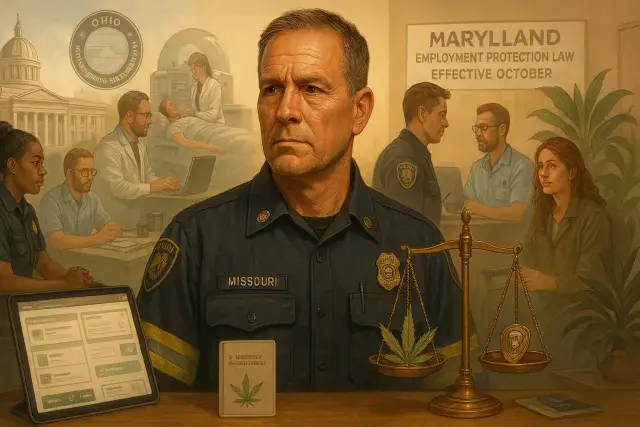
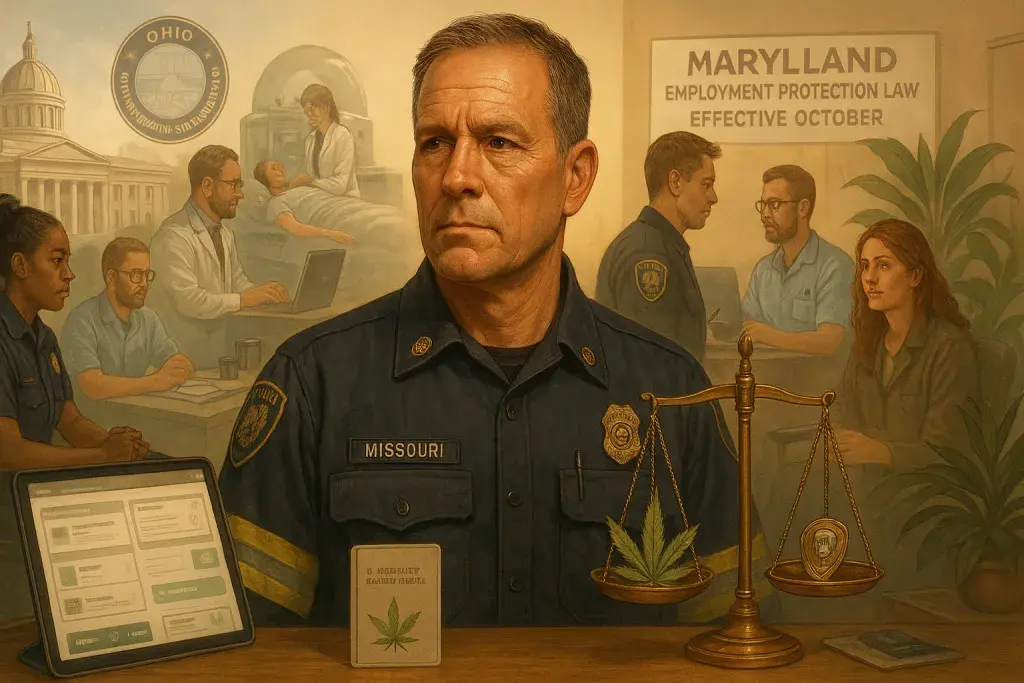
For the licensed cannabis industry, Maryland's new employment protection law deserves particular attention. Effective this October, the measure bars employers from discriminating against firefighters, EMTs, paramedics, and other rescue workers who hold registered medical cannabis patient status and test positive for cannabis metabolites - provided those workers are not impaired while on duty. The practical distinction matters: cannabis metabolites can remain detectable in standard drug screens for days or weeks after use, well beyond any period of actual impairment. This kind of statutory nuance is exactly what operators dealing with dispensary software in Montana and other regulated states have long tracked - because how states define "impairment" versus mere metabolite presence has direct consequences for employment policy, patient access, and ultimately retail demand from working adults in safety-sensitive careers. Maryland's law doesn't decriminalize on-duty use; it draws a legal line between lawful off-duty medical cannabis consumption and functional fitness for duty.
The occupational reality driving these laws is hard to overstate. As Jason Cerrano, a retired Missouri firefighter and paramedic with over two decades of field experience, put it: repeated exposure to traumatic events normalizes what, by any external measure, is profoundly abnormal. That psychological accumulation sits at the core of why standard outpatient counseling and medication protocols often fall short for first responders. The professional culture in fire and EMS has historically discouraged disclosure of mental health struggles, which compounds the clinical challenge. Ohio's newly signed legislation takes a structural approach - establishing a Post-Traumatic Stress Injury Commission to review applications from eligible first responders seeking help covering treatment costs, creating a reimbursement pathway rather than dictating a specific therapy.
Psychedelic Research Enters the Policy Mainstream
Beyond cannabis, several states are now treating psilocybin-assisted therapy and related interventions as legitimate subjects of public health policy rather than fringe proposals. Connecticut expanded a Yale University pilot program this year - previously restricted to veterans, retired first responders, and frontline health care workers - opening enrollment to any state resident 18 or older who meets clinical eligibility criteria set by Yale's institutional review board. That's a meaningful structural change: broadening the research pool while keeping clinical gatekeeping intact.
Missouri lawmakers advanced a bill that would have allowed veterans and first responders in approved research studies to receive psilocybin and ibogaine under medical supervision for PTSD and related conditions. The legislature adjourned in May without sending the bill to the governor - a stall, not a rejection, and the kind of near-miss that tends to return in the next session with broader support. Ibogaine, derived from an African plant, has attracted significant research interest for treatment-resistant PTSD, though it carries cardiovascular risks that make supervised clinical settings non-negotiable.
What This Means for Cannabis Operators and Medical Dispensaries
For dispensary operators in states with active medical cannabis programs, employment protection laws like Maryland's create a clearer commercial environment. When licensed workers in first responder roles can use medical cannabis off-duty without risking termination, the patient population for medical programs becomes more stable - and more willing to register and purchase through licensed retail channels rather than avoid formal enrollment out of employment fear. That has downstream implications for medical dispensary revenue, patient registry numbers, and wholesale demand for specific product categories, particularly those associated with sleep, anxiety management, and recovery rather than recreational use.
Compliance teams at multi-state operators should also track how "impairment" standards evolve state by state. Maryland's approach - distinguishing metabolite presence from actual on-duty impairment - may become a template. If it does, dispensaries will field more questions from medical patients in sensitive occupations about what documentation, dosing schedules, and product selection mean for their employment compliance. Budtenders and patient care staff aren't clinicians, but they operate at the front of that conversation. Training and point-of-sale educational resources matter here.
The broader trend is this: states are beginning to treat PTSD treatment for first responders as a public health infrastructure question, and cannabis - alongside emerging psychedelic therapies - is now inside that policy frame rather than outside it. For licensed cannabis businesses, that's a shift in how medical programs get positioned, funded, and socially legitimized. It doesn't resolve 280E, resolve banking access, or simplify excise tax obligations. But it does signal that the medical use case is gaining durable, bipartisan political traction in contexts that are difficult to argue against.