
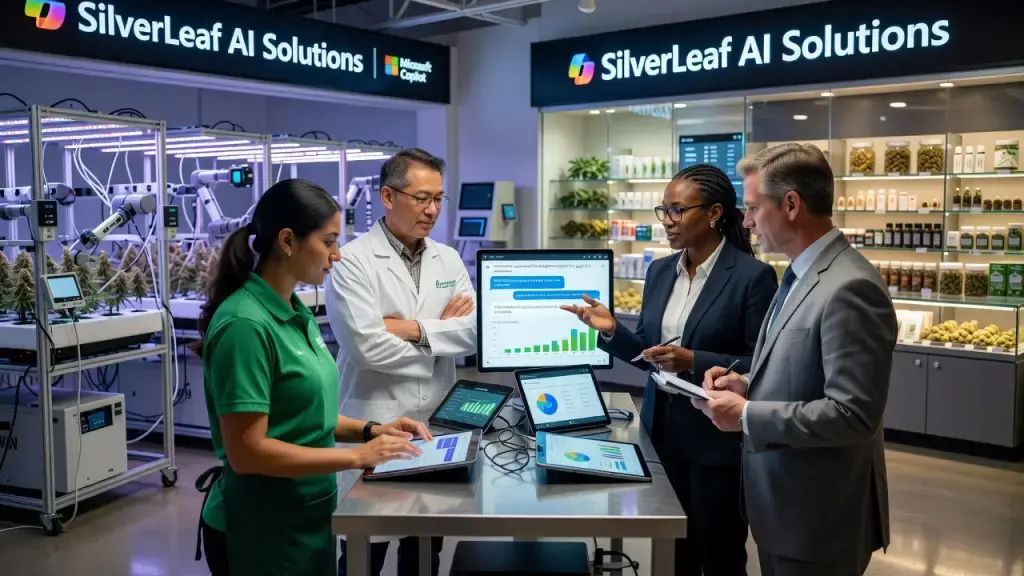
Cannabis operators are sitting on more operational data than most of them know what to do with. Cultivation logs, production batches, compliance reports, sales transactions, inventory counts - it all piles up daily, often across half a dozen disconnected systems. The problem was never collection. It's retrieval, and more specifically, how long it takes to turn a question into an answer that actually changes a decision.
That gap between having data and using it has shaped cannabis software for years. Compliance platforms built around seed-to-sale tracking and METRC reporting solved a regulatory problem - proving where product came from and where it went. What they didn't solve was the slower, quieter problem of day-to-day business intelligence: which SKUs are dragging margins, which strains are outperforming forecast, where inventory is about to expire on a shelf nobody checked this week.
Why Spreadsheets Stop Working at Scale
Here's the catch with most cannabis back-office workflows: the information exists, but it's locked behind reports that someone has to run, export, and stitch together by hand. A cultivation manager wants yield variance by strain. A controller wants margin by product line. A compliance officer wants to flag inventory discrepancies before an audit catches them first. Each of those questions, in practice, often means logging into a separate module, pulling a report, and waiting.
That lag has real financial consequences. Margins in cannabis retail and wholesale are already thin, squeezed by 280E tax treatment, wholesale price compression, and rising compliance overhead. An operator who finds out about aging inventory three weeks late isn't just inefficient - they're eating a loss that earlier visibility could have prevented.
Natural-Language Access to Operational Data
Artificial intelligence is starting to close that gap by letting users ask plain questions instead of building reports. Ben Marchi-Young put it plainly: "Most cannabis businesses already have the data they need. The challenge isn't collecting more information, it's getting answers quickly enough to take action. AI gives operators a faster way to identify risks, uncover opportunities, and make better decisions using the data they're already capturing every day."
In practice, that means a budtender, cultivation lead, or finance manager can ask something like "which strains generated the highest margins this quarter" or "what inventory is approaching expiration" and get a direct answer pulled from the business's own ERP, rather than a two-hour spreadsheet exercise.
- Top-performing strains and products by margin, not just volume
- Aging or slow-moving inventory before it becomes a write-off
- Compliance exceptions and discrepancies flagged earlier than a periodic audit
- Production bottlenecks, yield variances, and labor inefficiencies across cultivation and manufacturing
SilverLeaf is one vendor building toward this with its AI chatbot, built on Microsoft Copilot, which exposes operational tables and fields through secure APIs so staff can query data conversationally - no SQL, no report-building, no hopping between screens. The pitch is straightforward: give employees across cultivation, sales, finance, and compliance a faster path to the information they already own.
From Answering Questions to Taking Action
What's striking is where this is headed next. Today's tools mostly answer questions. The next generation is aimed at acting on them - automating tasks like creating master item variants, suggesting lot or tag allocation for outgoing orders so tracked inventory doesn't get misassigned, or forecasting crop yield based on cultivation history and in-progress grow data.
None of this replaces the fundamentals of compliance. Lab testing, COA verification, compliant packaging, and accurate METRC reporting remain non-negotiable regardless of how fast an AI tool can surface a margin report. What AI changes is the speed at which operators notice a problem - a yield variance, a compliance exception, a shrinking inventory buffer - before it becomes a bigger one. In an industry running on thin margins and heavy regulatory scrutiny, that lead time is worth something.