Charles County, Maryland is preparing to extend its medical cannabis zoning rules to cover adult-use dispensaries, following a staff recommendation from the Planning and Growth Management Department to amend the county's zoning ordinance. The proposed change flows directly from the Maryland General Assembly's 2023 Cannabis Reform Act, which legalized recreational cannabis sales statewide and created the framework for new operator licenses. For cannabis businesses eyeing the Southern Maryland market, the direction is clear: the county intends to move - methodically - toward a regulated adult-use retail environment.
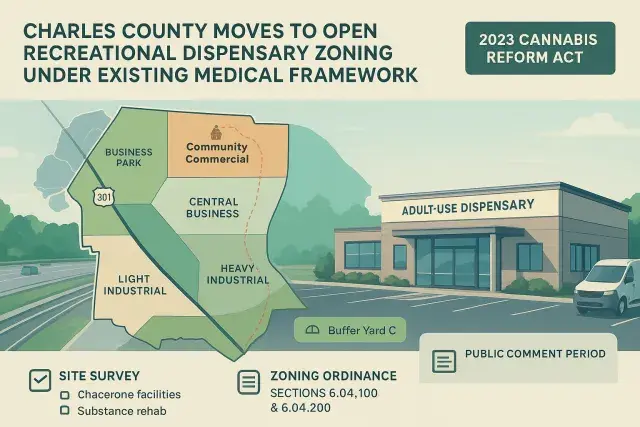
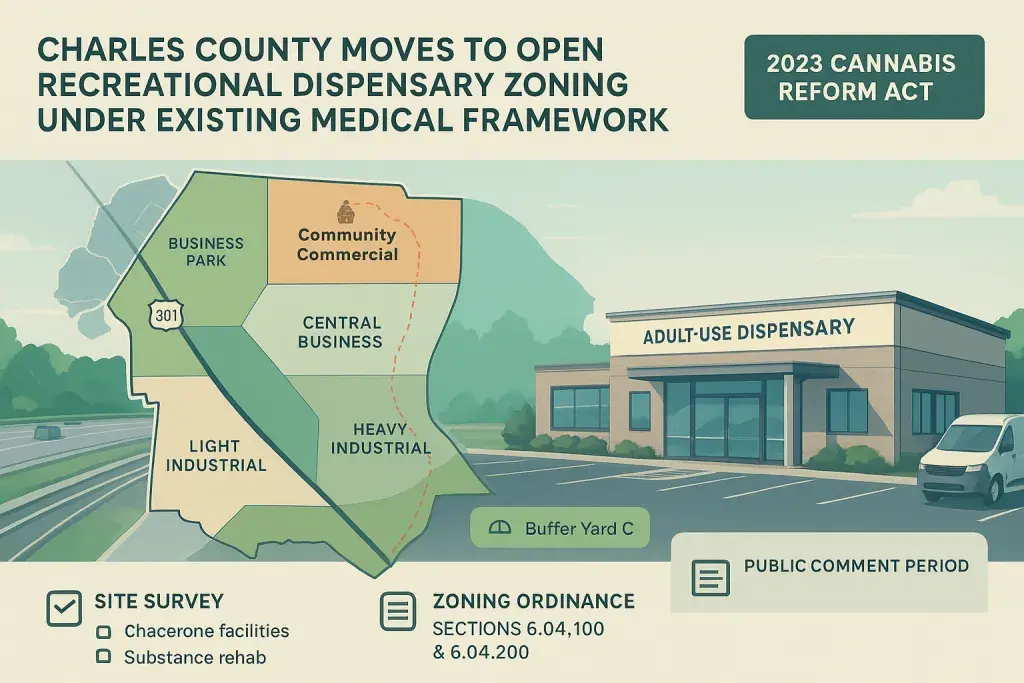
What's worth understanding here is the mechanism the county is using. Rather than building a new regulatory structure from scratch, planners are proposing to strip the medical-use qualifier from existing code sections - specifically Sections 6.04.100 and 6.04.200 - while keeping every other condition in place. The same six zones that permit medical dispensaries would permit adult-use retail. The same 1,000-foot buffer from schools, day-care facilities, and substance rehabilitation centers would apply. The buffer yard C requirement stays. Operators would still need an active license from the Maryland Cannabis Administration, which succeeded the Maryland Medical Cannabis Commission after the 2023 reform. For dispensary operators who have studied how other jurisdictions manage licensing compliance and zoning transitions, this approach mirrors what many states have done - maintain existing guardrails while broadening the use category. Operators tracking similar regulatory rollouts in other markets, including those using Maine seed-to-sale dispensary software to manage compliance documentation across jurisdictions, recognize this pattern as the more predictable path for local governments to take.
The six eligible zones - Business Park, Community Commercial, Central Business, Light Industrial, Heavy Industrial, and Planned Employment Park - cover the kinds of commercial and industrial corridors where dispensary operations function most effectively. The U.S. 301 corridor, a primary commercial spine running through the county, is identified as a natural fit given its existing zoning classifications and traffic infrastructure. That's not a small consideration. Dispensaries are retail operations with real parking demands, delivery logistics, and point-of-sale throughput requirements. Siting them in commercial and light industrial zones rather than residential or mixed-use areas reduces friction with neighbors and makes compliance with buffer requirements significantly more achievable.
District Balance Adds a Layer of Local Control
Here's the catch that operators need to factor into any site-selection calculus: the County Commissioners have directed staff to draft legislation ensuring that the projected five additional licenses are distributed evenly across the county's commissioner districts. That's a deliberate constraint on market geography. In practice, it means a developer or operator who secures a compliant site in a commercially dominant district may still face a licensing ceiling if that district's allocation is already spoken for. Geographic balance provisions like this aren't unusual - several Maryland jurisdictions have layered local controls on top of state licensing frameworks to manage where adult-use retail concentrates. The tradeoff is that it can slow site selection and complicate real estate strategy for operators who are already working against competitive timelines.
For landlords and commercial real estate stakeholders along the 301 corridor and in the county's business parks, the even-distribution requirement is worth watching closely. A zoning change that looks uniformly permissive on paper may, in practice, channel license-ready tenants toward underutilized commercial nodes in less-trafficked districts - particularly if operators in high-traffic zones discover their district is already at capacity. That dynamic can compress lease negotiating leverage and shift where retail cannabis investment actually lands.
What Operators and Compliance Professionals Should Track
The county's approach keeps compliance requirements continuous with what medical operators already know. The 1,000-foot buffer standards, buffer yard conditions, and Maryland Cannabis Administration licensing requirements are not being relaxed. That continuity matters for operators building out their compliance infrastructure - site surveys, license documentation, local approval workflows, and operational permits all need to reflect the same thresholds that governed medical operations. No new exemptions are being created here.
The practical steps ahead include a public comment period, as Maryland zoning amendments require public input opportunities before adoption. Staff will draft legislation for commissioner review, and the final ordinance will establish where adult-use sales can legally occur once state licenses are issued. Operators and investors who want to move quickly when new licenses become available should be positioning now - identifying compliant sites, confirming buffer measurements, and engaging with the county's planning process during the public input phase rather than after the ordinance is finalized.
Charles County's measured approach - maintain conditions, expand eligibility, distribute geographically - reflects where much of Maryland's local cannabis regulation is heading post-reform. The counties that update their frameworks cleanly and early will be better positioned to receive and process license applications without delay. For operators, the window between a zoning ordinance passing and state licenses being issued is often the most productive period for site control, lease execution, and build-out planning. That window is opening in Charles County now.