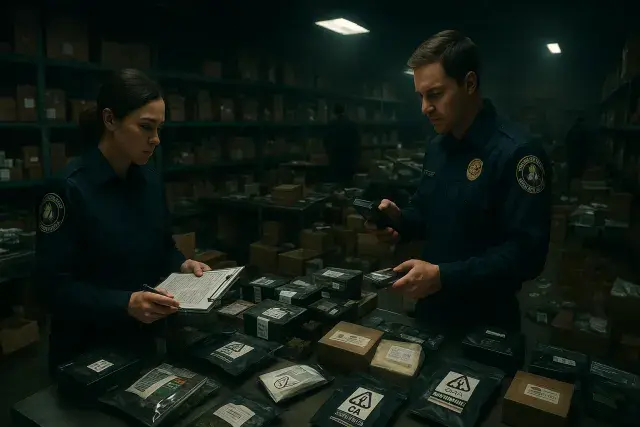
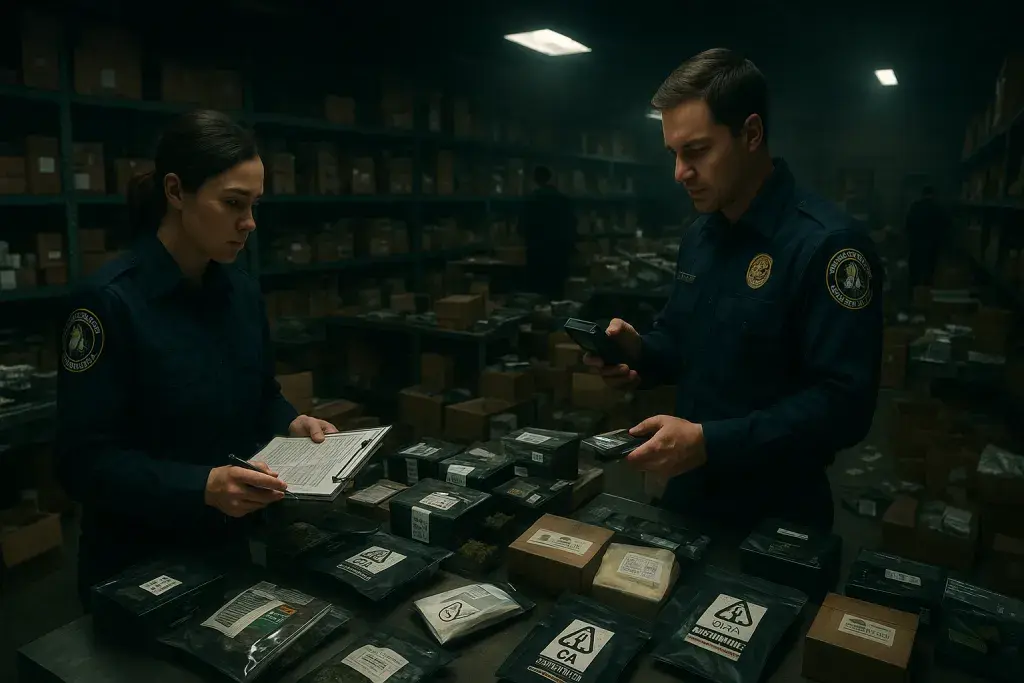
Michigan's Cannabis Regulatory Agency has filed a formal complaint against VJAS 1, a licensed cannabis processor operating in Harrison Township, after an inspection uncovered more than 12,000 individual cannabis products with no Metrc tags or identifying information. Among the untagged inventory were items in California-specific packaging - marked with "CA" and carrying California-mandated warning language - raising the possibility that the facility received or held products that never entered Michigan's licensed supply chain at all. The company now faces fines and potential license suspension, restriction, revocation, or non-renewal.
For anyone who works with seed-to-sale tracking systems, the scale here is striking. Metrc is Michigan's mandatory inventory tracking platform, and every licensed product in the state is supposed to carry a Metrc tag that ties it to a specific batch, a specific licensee, and a specific location. Twelve thousand untagged units isn't a paperwork gap - it's a wholesale breakdown of inventory control. Regulators in other states have faced similar enforcement pressures, and tools like marijuana pos software oregon operators use demonstrate how integrated point-of-sale and inventory platforms are increasingly central to maintaining compliant records across licensed markets. When investigators cross-referenced the few properly tagged products they did find at VJAS 1, those items turned out to be assigned to other licensed businesses entirely - meaning the tags present were not just isolated errors but pointed to product movement that bypassed the chain of custody the tracking system is designed to protect.
What makes this case more than a routine compliance citation is what the California packaging suggests. Regulated cannabis markets are closed systems by design - product must be cultivated, processed, tested, and tagged within the state before it can enter retail or wholesale channels. Packaging that carries another state's required warnings and abbreviations doesn't get into a licensed Michigan processing facility through a misrouted delivery manifest. Employees at the facility reportedly could not account for how the products arrived or why so many lacked identifying tags. That absence of explanation matters, because Metrc's entire function rests on the assumption that every person handling cannabis in a licensed facility knows precisely what they have, where it came from, and where it's going. The moment that breaks down, the traceability guarantee collapses with it.
Why Seed-to-Sale Tracking Exists - and What Happens When It Fails
States built mandatory inventory tracking systems specifically to prevent illicit product from entering the licensed market and to ensure that licensed product doesn't exit it improperly. Every Metrc tag represents a documented chain: cultivation site, harvest batch, transfer manifest, testing result, processor receipt. A facility holding thousands of products with no tags isn't just out of compliance with an administrative requirement - it's operating outside the fundamental accountability structure that licensed cannabis is built on. Consumer safety depends on that chain. Lab-tested, labeled, tracked product is the baseline assurance that what reaches a retail customer was grown, processed, and handled under regulated conditions. Untagged product, by definition, carries none of those assurances.
The fact that some tagged products on-site were actually registered to other businesses introduces a separate and serious concern: those items shouldn't have been there. Whether through unauthorized transfers, record falsification, or some other mechanism, product assigned to one licensee appearing at another without a proper transfer record is a supply chain integrity failure that regulators across every adult-use state treat as a significant violation. Michigan's CRA, like its counterparts in other regulated states, has built its enforcement framework around exactly this kind of discrepancy detection.
The Enforcement Stakes for Licensed Operators
VJAS 1 faces a range of disciplinary outcomes: fines, restriction of operations, suspension, full revocation, or refusal to renew its license. Any one of those, short of fines alone, effectively ends a cannabis business. A processing license is the operational foundation for any entity that transforms raw cannabis into consumer products - if that license is suspended or revoked, the business stops. Wholesale customers lose a supplier. Any brands or products in the facility's pipeline are disrupted. And the principals involved may find future license applications complicated by the record this complaint creates.
For other licensed operators watching this case, the operational takeaway is straightforward. Inventory reconciliation isn't a quarterly exercise - it's an ongoing obligation. Any product entering a licensed facility without a valid Metrc tag should be flagged, segregated, and reported immediately. The moment untagged product sits commingled with compliant inventory, the entire stockroom becomes harder to defend in an audit. That's a risk no licensed processor, retailer, or distributor can afford to absorb, particularly as state regulators continue to prioritize supply chain integrity as a core enforcement priority.
A Broader Signal to the Michigan Market
Michigan has one of the most active adult-use cannabis markets in the country, with a substantial number of licensed processors, retailers, and cultivators competing in a maturing market. CRA's willingness to file formal complaints and pursue meaningful license consequences - not just administrative fines - sends a clear signal about where the agency's enforcement posture sits. The presence of what appears to be out-of-state product is the kind of allegation that draws attention well beyond the immediate case, because it touches on the integrity of the regulated market as a whole. Illicit product undercutting the licensed supply chain has been a persistent problem across multiple state markets. When regulators find what looks like evidence of it inside a licensed facility, the response tends to be firm - and public.
VJAS 1's situation is an object lesson in what happens when inventory controls fail at scale. Whether through negligence, deliberate circumvention, or some combination, the result is the same: a facility that cannot account for thousands of products, cannot explain how they arrived, and cannot demonstrate that any of it was handled in compliance with the law. In a regulated market, that's not a recoverable position without serious consequences.