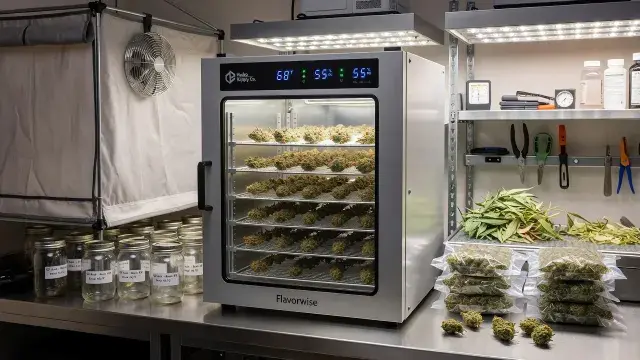
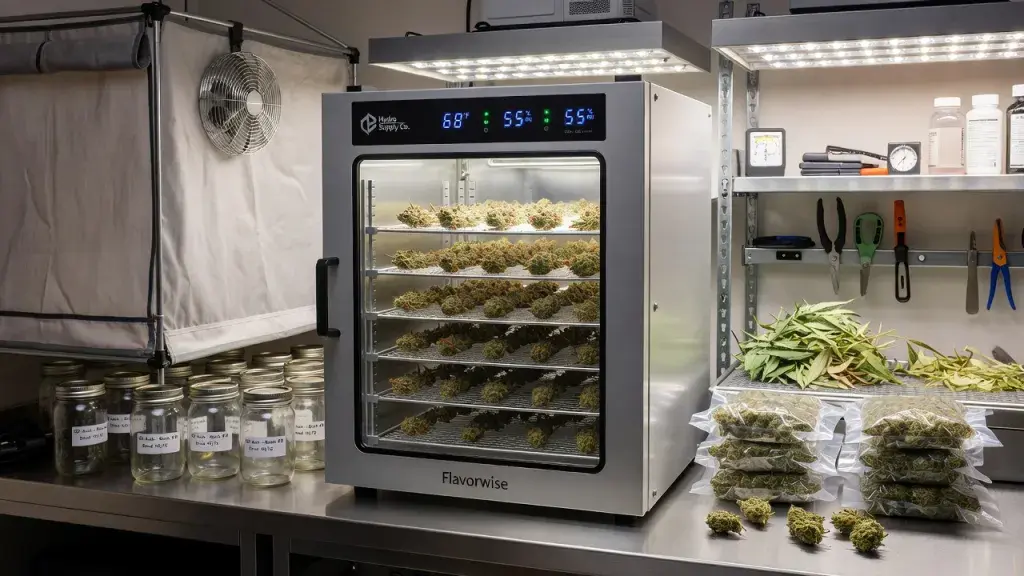
A new environmental control cabinet aimed at home and craft cultivators is heading to market with pre-orders now open, part of a steady push by cultivation technology suppliers to bring facility-grade climate precision down to a countertop footprint. The product, marketed under the Flavorwise brand through Hydro Supply Co., promises to automate drying, curing and storage in a single enclosed unit rather than the tent-and-fan setups many small growers currently cobble together.
Why Drying and Curing Remain the Weak Link
Ask anyone who has worked a harvest and they'll tell you the grow is only half the job. Drying and curing determine whether the terpene and cannabinoid profile a plant developed in the field or grow room actually survives to the jar. Humidity swings, uneven airflow and inconsistent temperature during this window are a recognized cause of degraded flower quality, mold risk and inconsistent moisture content - the kind of inconsistency that shows up later on a certificate of analysis if that batch ever reaches a lab. For licensed cultivators selling into wholesale channels, that variability has direct consequences: product that fails a moisture or microbial test doesn't move, and batches that pass but test inconsistently complicate pricing and retailer trust. For home growers, the stakes are personal rather than commercial, but the physics are the same.
Traditional post-harvest setups rely on separate equipment and manual intervention - hang-drying in a tent, moving material to jars, then burping those jars by hand to manage humidity during cure. It works, but it's labor-intensive and forgiving of error only up to a point. Automated single-cabinet systems that hold tight temperature and relative humidity bands are an attempt to remove that manual guesswork, a trend that mirrors what's already happened in commercial-scale drying rooms at licensed facilities, where controlled-environment agriculture principles have been standard for years.
What This Signals for the Broader Supply Chain
The emergence of consumer- and craft-grade versions of facility technology is worth watching beyond the home-grow segment. Equipment vendors that once sold exclusively to licensed, commercial cultivators are increasingly building tiered product lines - separate pricing and account structures for licensed facilities, resellers, consultants and individual growers, as this launch does. That segmentation reflects a maturing B2B cannabis equipment market where manufacturers need to serve regulated commercial buyers and unregulated personal-use growers simultaneously, often in the same states, under very different compliance obligations.
For licensed cultivation facilities evaluating this category of equipment, the relevant questions go beyond moisture control specs. Any drying or curing hardware brought into a licensed operation needs to fit within existing standard operating procedures, inventory tracking tied to seed-to-sale systems like METRC, and facility sanitation protocols tied to state cultivation licenses. Equipment that holds tighter humidity tolerances can help reduce microbial contamination risk, which matters for passing lab testing requirements, but it doesn't replace testing, documentation or batch recordkeeping obligations that regulators require regardless of what drying method was used.
A Note on Scale and Expectations
It's worth being plain about what a single cabinet rated for a handful of plants and roughly a half-dozen pounds per batch actually represents: a tool for home cultivators and small craft operations, not a solution for mid-size or large licensed cultivation facilities processing harvests measured in the hundreds of pounds. Operators evaluating return on investment should weigh equipment cost against labor savings, reduced spoilage, and consistency gains - not against any claim about final product quality, since outcomes still depend on starting plant material, genetics and handling practices upstream of the cabinet itself.
Buyers, whether home growers or licensed businesses, should also confirm any equipment purchase complies with local zoning and residential use restrictions where cannabis cultivation at home is legal but regulated, and that commercial buyers confirm equipment fits within their jurisdiction's cultivation licensing and facility requirements before installation.