
A federal funding bill working through Congress could give Missouri hemp retailers a reprieve - but only a partial one. The U.S. Senate voted 61-31 early Saturday to approve a stopgap spending measure that would fund federal agencies through Dec. 11 and, in the process, delay the federal ban on intoxicating hemp THC products until that same date. The bill now heads to the U.S. House, and if it clears that chamber and reaches the president's desk, Missouri's own hemp beverage carve-out kicks in automatically.
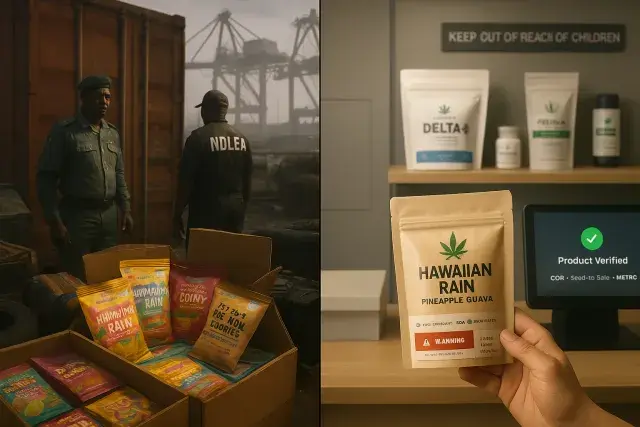
Here's the mechanism worth understanding: Missouri Gov. Mike Kehoe signed legislation this spring pulling intoxicating hemp products off shelves starting Nov. 12, largely mirroring the federal ban Congress passed last year. But state lawmakers wrote in an exception. If Congress delays the federal ban, everything except intoxicating beverages stays banned in Missouri as scheduled - meaning edibles, tinctures, and other hemp-derived THC formats disappear from store shelves regardless of what happens in Washington. Only canned seltzers and similar drinks get a reprieve, and only if the federal delay actually becomes law. For operators trying to plan inventory, wholesale ordering, and compliant packaging runs around a moving regulatory target, that kind of bifurcated outcome is exactly the sort of complexity that a modern cannabis retail platform for South Carolina or any adjacent regulated market is built to help track - though Missouri retailers, for now, are largely managing it manually.
Jay Patel, president of the Missouri Hemp Trade Association, called the Senate vote a "good sign" for the industry, noting there's bipartisan appetite - and reportedly some interest from the White House - for meaningful federal regulation of hemp products. But he was blunt about the limits of a federal fix: "Whatever happens on the federal side, it's not going to fully solve our problems in Missouri." That's a fair assessment. State law still bans most intoxicating hemp categories in November no matter what Congress does with the funding bill.
A Lawsuit Still Looms Over the Whole Framework
The Missouri Hemp Trade Association and a coalition of hemp businesses aren't just watching Congress. They filed a federal lawsuit last month in the U.S. District Court for the Western District of Missouri, arguing the state's hemp ban relies on definitions of hemp and marijuana that are unconstitutionally vague. That litigation runs on its own timeline, separate from the funding bill, and it raises the real possibility that even the beverage carve-out - assuming Congress delivers it - gets challenged or reshaped in court before Dec. 11 arrives. Retailers building compliance plans around the current statutory language should treat it as provisional, not settled.
What This Means for Retail Operations
For hemp retailers, the practical stakes are immediate. John Grady, who owns Slaphappy Hemporium with his wife Kara in Rosebud, Missouri, said the Senate action makes it likely they can keep selling their THC seltzers through December. But that's cold comfort for the rest of the store. "We started off as a beverage producer," Grady said. "So for us, that is a good thing, but it also hurts the whole other part of our business." Edibles and other formats are gone from Missouri shelves in November no matter what the House does next. That forces operators into a familiar retail scramble: clearing SKUs, adjusting wholesale menus, and managing customer expectations as products vanish from the shelf on a fixed date. Some shoppers, Grady noted, are already stocking up on items they know will disappear.
The Bigger Regulatory Picture
What's striking here is how much weight a single funding bill now carries for an entire product category. Hemp-derived THC beverages occupy a regulatory gray zone that state and federal law have never fully reconciled, and Missouri's carve-out shows how patchwork that framework has become - one product format protected, others not, depending on definitions written into two different bills passed months apart. Groups like the ones the Gradys belong to are pushing to use the delay window to lobby for comprehensive federal rules before Dec. 11, rather than another short-term punt. Whether that happens will shape not just Missouri's shelves, but how compliance teams, distributors, and payment processors across the hemp sector plan for the next product category that Congress decides to define - or fails to.