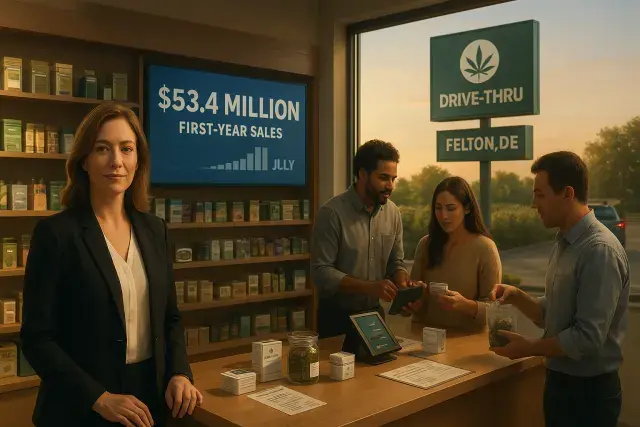
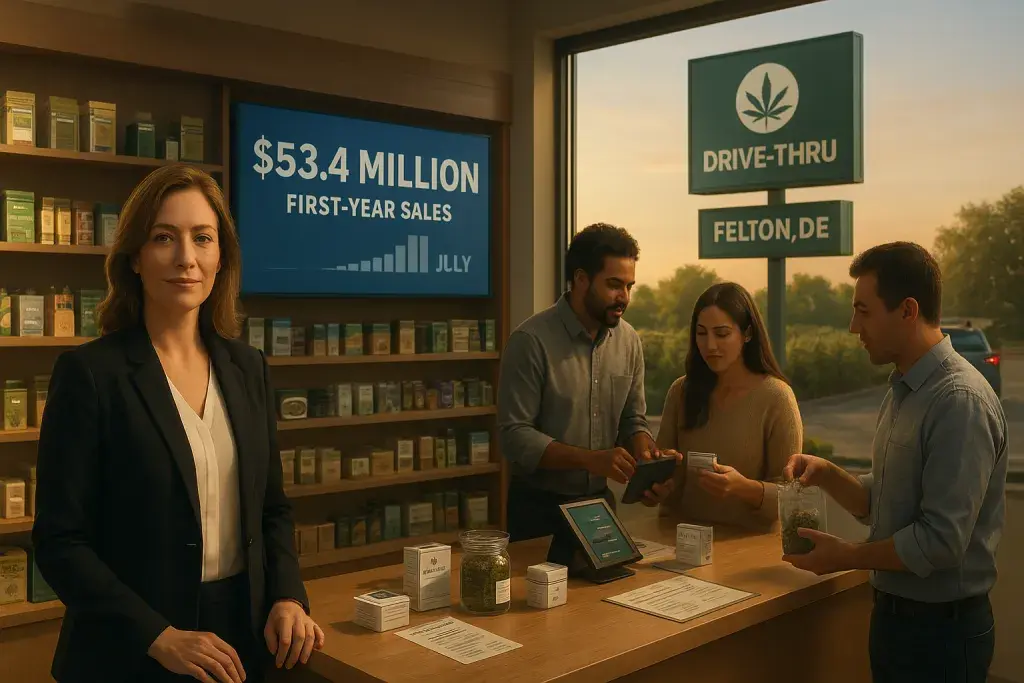
Delaware's recreational cannabis market has cleared a threshold worth watching: more than $53.4 million in adult-use sales during its first year, according to the Office of the Marijuana Commissioner. That figure represents more than double what the state's medical-only program generated the year prior, and officials say the growth curve hasn't flattened. July was the strongest sales month recorded so far, a signal that consumer demand is still climbing rather than plateauing.
The state's licensing structure now covers 38 active licenses spanning cultivation, manufacturing, retail and testing, with more expected to come online in the months ahead. For operators trying to scale in that environment, back-end infrastructure matters as much as square footage. Retailers managing higher basket volume and drive-thru throughput, as seen at The Farm in Felton, need systems that can reconcile inventory, tax reporting and compliance logs in real time. That's where tools like a cloud-based cannabis POS come into play, letting multi-location or high-volume dispensaries sync sales data with state seed-to-sale tracking without manual reconciliation eating into staff hours.
Why the Numbers Matter for Operators
Doubling sales year-over-year sounds tidy on paper, but the underlying driver is access, not just demand. Jennifer Stark, CEO of The Farm, noted that many recreational customers never enrolled in Delaware's medical program to begin with. That's a distinct customer base - one that didn't want the paperwork, the physician certification, or the card renewal cycle. Converting that population into retail traffic is less about marketing and more about removing friction: walk-in purchases, no registry, no waiting period. For store managers, that shift changes staffing patterns, SKU turnover and even parking-lot design, as Felton's drive-thru model suggests.
The Federal Wall Still Shapes Every Business Decision
Here's the catch that doesn't show up in a sales report. Cannabis remains federally illegal, which means Delaware's newly licensed operators can't walk into a bank branch for a line of credit or apply for an SBA loan the way any other small business would. Commissioner Joshua Sanderlin called this one of the toughest structural barriers facing new entrants, and he's not wrong. Seed capital has to come from private investors, family funding or specialty cannabis lenders who charge accordingly for the risk. Add Section 280E of the federal tax code, which bars standard business deductions for plant-touching companies, and the margin pressure on a new dispensary looks very different from a typical retail startup.
What Comes Next: Supply, Equity and Selection
State officials say the priority now shifts toward supply-side growth - more cultivators, more manufacturers, more product diversity on dispensary shelves. A retail market with plenty of storefronts but thin wholesale menus tends to stall on price and selection, so bringing cultivation and manufacturing licenses online matters as much as opening new stores. Delaware's Social Equity Fund has already issued nine grants totaling more than $1 million, aimed at helping entrepreneurs without generational wealth or existing capital access enter the licensed market. Whether that funding translates into sustained ownership stakes, rather than short-term entry, will be the real test of the program's design.
- 38 active licenses currently span cultivation, manufacturing, retail and testing in Delaware.
- Federal prohibition blocks traditional bank loans and SBA financing for cannabis businesses.
- Section 280E limits standard tax deductions for plant-touching operators.
- The Social Equity Fund has awarded more than $1 million across nine grants.
None of this changes the basic consumer-safety framework that governs the market: age verification at point of sale, lab-tested batches with certificates of analysis, and compliant packaging remain non-negotiable regardless of how fast the retail side expands. Growth is good news for licensed operators, but it doesn't loosen the regulatory guardrails that keep the market accountable.